This article in 30 seconds
- “Contains NMN” and “provides NMN” are two different things. NMN (a substance the body uses as raw material for NAD⁺) is present in edamame and tomatoes, but only in trace amounts — around 1 mg per 100 g.
- Even the most efficient food takes 24 kg a day. Meeting the 250 mg daily dose used in clinical studies through food alone would take about 2,400 mushrooms, or 640 tomatoes.
- NMN is a food, not a pharmaceutical. It was classified as a non-pharmaceutical in the 2020 revision of Japan's food–drug classification, and no claims may be made about treating or preventing disease.
1. The conclusion: even the most efficient food takes 24 kg a day
Let's start with the conclusion. Covering the 250 mg daily dose used in clinical studies through food alone is not realistic in terms of quantity. For five foods — mushrooms, edamame, avocados, tomatoes, and broccoli — here is the weight required if 250 mg were to be covered by that food alone.
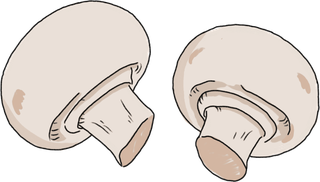 Mushrooms
24kg/day
Mushrooms
24kg/day
 Edamame
54kg/day
Edamame
54kg/day
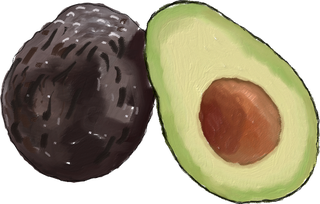 Avocados
70kg/day
Avocados
70kg/day
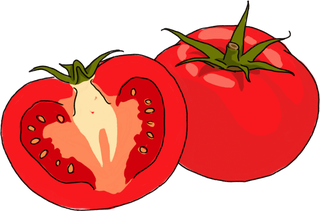 Tomatoes
96kg/day
Tomatoes
96kg/day
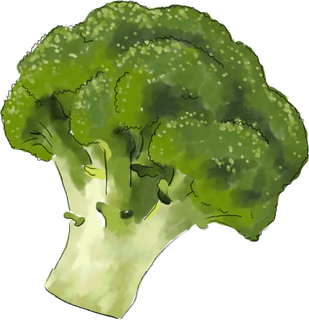 Broccoli
100kg/day
Broccoli
100kg/day
Even mushrooms, the most efficient of the five, come to 24 kg per day — roughly two and a half 10 kg bags of rice. Broccoli comes to 100 kg, close to the combined weight of two adults. Eating that every single day is not realistic.
The key point
The problem is not which food you choose — it is a difference of orders of magnitude. The target is measured in milligrams (250 mg), while the answer from food comes back in kilograms (24–100 kg). No choice of food closes that gap.
2. Weight is hard to picture, so let's count pieces
Put the same numbers in pieces, and it comes to 640 tomatoes or 2,400 mushrooms a day. Since kilograms are hard to visualize, the next figure divides the weights by the typical weight of a single piece.
2,400
pieces
Mushrooms
At 10 g per piece
270
packs
Edamame
At 200 g per pack
350
pieces
Avocados
At 200 g per piece
640
pieces
Tomatoes
At 150 g per medium tomato
333
heads
Broccoli
At 300 g per head
Split 640 tomatoes across three meals and you are still looking at more than 210 per meal. Restated as counts, the impracticality of the quantities becomes plain.
3. How much NMN does 100 g of food actually contain?
Working backwards from the weights above, every food sits at around 1 mg per 100 g or less. The table below lists the values calculated from Figure 1.
| Food | Per 100 g | Amount needed for 250 mg | As pieces |
|---|---|---|---|
| Mushrooms | approx. 1.04 mg | 24 kg | 2,400 pieces |
| Edamame | approx. 0.46 mg | 54 kg | 270 packs |
| Avocados | approx. 0.36 mg | 70 kg | 350 pieces |
| Tomatoes | approx. 0.26 mg | 96 kg | 640 pieces |
| Broccoli | approx. 0.25 mg | 100 kg | 333 heads |
Values per 100 g are calculated as 250 mg ÷ required weight × 100.
What this table shows is a single point: “vegetables contain NMN” and “a meaningful amount can be obtained from vegetables” are two different statements. Seawater contains dissolved gold, yet nobody tries to collect gold from it. Between something being present and a practical amount being obtainable lies a wide gap.
The key point
Content varies with growing region, individual produce, and measurement conditions. But even if a food contained twice the values above, the required amount would only be halved — still on the order of tens of kilograms. Some spread in the numbers does not change the conclusion.
What about exercise?
To state the conclusion first: this is not to say that diet or exercise is meaningless. Beyond diet, it is also known that exercise can raise NAD⁺ levels in the body. The single point this article makes is that covering the equivalent of 250 mg through food alone is quantitatively difficult.
How NMN is regulated in Japan: a food, not a pharmaceutical
In regulatory terms, NMN is an ingredient handled as a food, not a pharmaceutical. On March 31, 2020, in a revision of the food–drug classification (the classification separating pharmaceuticals from foods) by the Ministry of Health, Labour and Welfare (MHLW), NMN was classified as a non-pharmaceutical. This allowed it to be handled as a food, and its distribution as a supplement has since expanded.
Put the other way around, no claims may be made about treating or preventing disease. We likewise supply β-NMN as a raw material for research and manufacturing.
About the figures in this article
The conversions in this article are rough estimates based on the following three assumptions. When quoting the numbers, please read them together with these assumptions.
- The reference of 250 mg/day is a dose used in human clinical studies. No daily requirement or recommended intake has been established for NMN
- The piece counts are a simple calculation, dividing by the per-piece weight noted on each card. Actual sizes vary
- The content per 100 g is a back-calculated value from the required weights, not a value taken directly from the literature
How to read “99% purity” claims when evaluating β-NMN as a raw material is covered in NMN Purity and Impurities.
Frequently Asked Questions
Which food contains the most NMN?
Of the five foods covered in this article, mushrooms are the most efficient source, at roughly 1.04 mg per 100 g. Even so, reaching 250 mg would take 24 kg — around 2,400 mushrooms — per day.
Why is 250 mg used as the reference dose?
Because it is a dose that has been used in human clinical studies. NMN is a non-pharmaceutical (food ingredient), and no daily requirement or recommended intake has been established for it.
Does exercise also raise NAD⁺ levels?
It is known that exercise can raise NAD⁺ levels in the body. The point of this article is not that diet or exercise is meaningless, but that covering the equivalent of 250 mg through food alone is not realistic.
How is NMN regulated in Japan?
In a revision of Japan's food–drug classification (the national classification that determines whether a substance is a pharmaceutical or a food) by the Ministry of Health, Labour and Welfare (MHLW) on March 31, 2020, NMN was classified as a non-pharmaceutical, allowing it to be handled as a food. Because it is not a pharmaceutical, no claims may be made about treating or preventing disease.
This article presents conversions of NMN content in foods. NMN is a non-pharmaceutical (food ingredient) and is not intended to treat or prevent any disease. Our β-NMN is supplied to medical and research institutions as a research reagent, and no specific effect from its ingestion is implied.
For product specifications and available sizes, see the β-NMN product page.